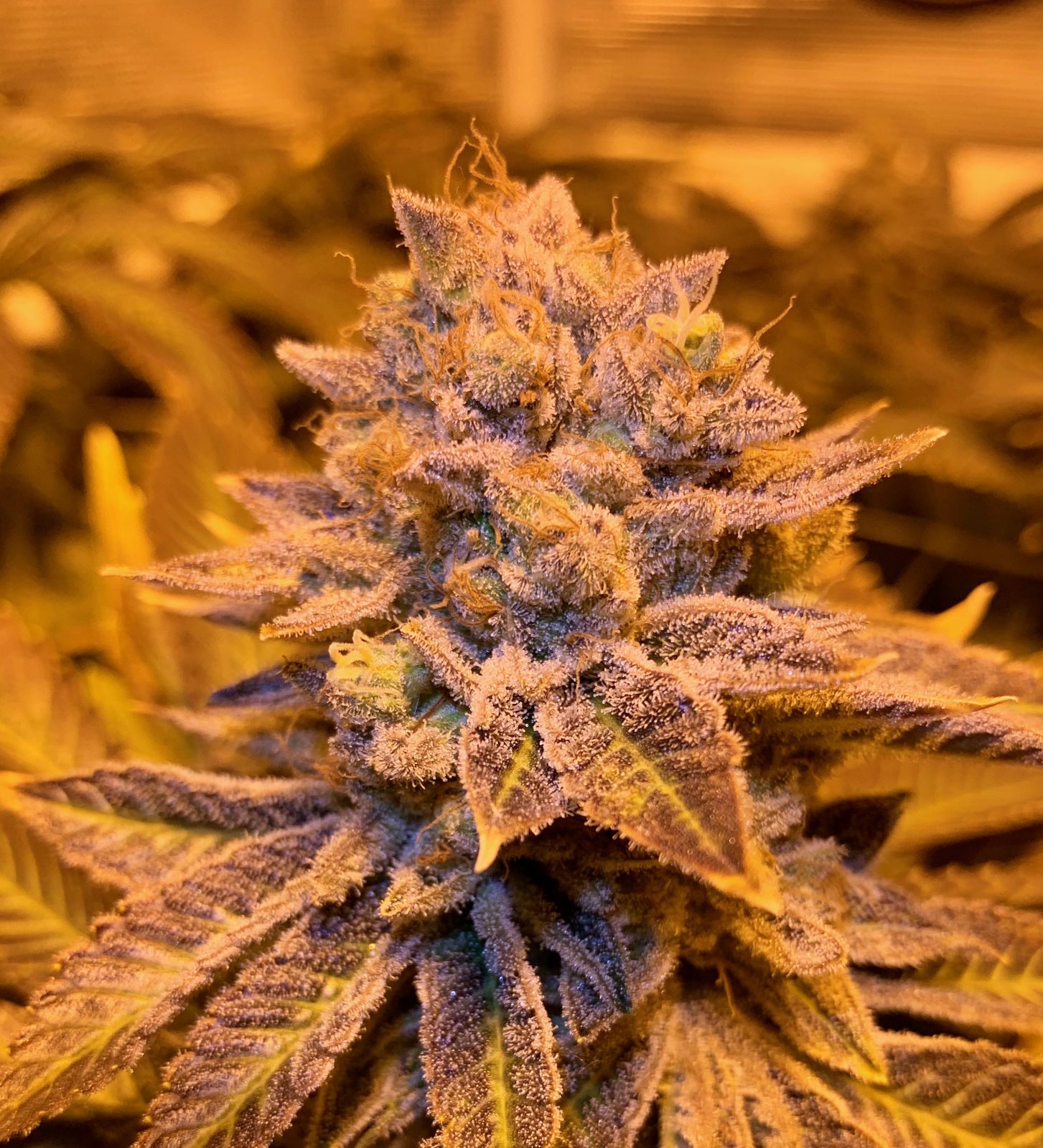
An independent 2026 review of Blueberry from ILGM. The DJ Short heritage, the grow profile (compact, mold-resistant, forgiving), indoor and outdoor yield, the relaxing indica effect, the fruit-forward terpene profile, and how it stacks up against Northern Lights and Granddaddy Purple.
Quick answer: Blueberry is the indica classic. Originally bred by DJ Short in the late 70s, ILGM's feminized photoperiod version typically tests in the 16 to 20 percent THC range, flowers in 8 to 10 weeks, and yields a steady 3 to 5 ounces per plant indoors. The effect is heavy, relaxing, body-forward, with the sweet blueberry aroma the strain is named for. Grow difficulty is low to moderate. Compact plants, modest feeding, mold resistance, and a forgiving disposition make Blueberry one of the better beginner photoperiods in the catalog.
Blueberry is one of a handful of strains that earns the word classic. DJ Short, an Oregon breeder who became one of the most respected names in cannabis genetics, developed Blueberry in the late 1970s and early 1980s by crossing landrace Afghani with Thai and Purple Thai. The Afghani parent contributes the indica structure (short, broad-leafed, resinous, fast-flowering). The Thai parents contribute the sweet, fruity, slightly tropical aroma that gave the strain its name. The cross has been worked and re-worked since, but the core profile has stayed remarkably stable.
The strain hit the broader market in the 1990s, won High Times Cannabis Cup in 2000, and has remained a catalog staple ever since. Its longevity is unusual in a market that constantly churns through new genetics. Blueberry has stayed because it does something specific (sweet aroma, heavy body effect, manageable grow, compact plants) and does it consistently. New strains keep chasing higher THC. Blueberry keeps chasing the same flavor and the same feel.
ILGM's feminized photoperiod version is a stable, true-to-type expression. For broader context on ILGM as a seed source, including germination guarantee and shipping track record, see our full ILGM Seed Bank review. Blueberry sits at the relaxing, beginner-friendly end of the catalog, well suited to growers stepping up from an easy autoflower like the one covered in our Northern Lights Autoflower review.
Blueberry is one of the more forgiving photoperiod strains a home grower will find. It is not as hands-off as a beginner autoflower, but it asks for less than most photoperiods and tolerates more.
Blueberry stays compact. Most plants finish at 3 to 4 feet indoors, with limited flowering stretch compared to sativa-leaning strains. That keeps headroom requirements modest and makes it a good fit for tents and closets where vertical space is tight. The plant grows as a dense, broad-leafed indica bush, which makes light penetration to lower bud sites the main canopy concern rather than runaway height.
Blueberry responds well to light low-stress training (LST) to open the canopy and improve light access to the lower nodes. Topping is optional and produces a more even canopy if done early in veg. Aggressive defoliation is not necessary; the plant carries fewer fan leaves than many sativa-dominant hybrids and tends to manage its own shade reasonably well. For a first photoperiod, a single early topping plus a couple of LST tie-downs is sufficient.
Blueberry is a moderate feeder. It does not need the heavy nutrient ramp that a strain like Bruce Banner demands. Standard nutrient lines at moderate strength work well, with attention to pH and a calcium-magnesium supplement particularly in coco or hydro. Overfeeding is a more common mistake on this strain than underfeeding. When in doubt, dial back rather than push.
Blueberry has good mold resistance for an indica with dense buds, which is one of the reasons it has stayed popular through generations of growers. Late-flower humidity should still be controlled (target the 40 to 50 percent range), and airflow under the canopy matters, but Blueberry tolerates slightly higher humidity than many indica strains without immediate bud rot risk. For cool finishing temperatures (low 60s F at night in the last two weeks), the buds often develop the deep purple and blue color the strain is famous for, an anthocyanin response. The setup that supports any strain through finish is covered in our Learn to Grow at Home guide.
Soil, coco, and hydro all work. Soil is the traditional choice for Blueberry and produces the cleanest expression of the terpene profile because soil-grown cannabis often reads as more flavor-developed in subjective tastings. Coco and hydro give faster growth and tighter control. For a beginner photoperiod grow, soil in a 3 to 5 gallon fabric pot is a low-risk, low-knowledge-required path.
Blueberry flowers in roughly 8 to 10 weeks once the light cycle is switched to 12/12, slightly faster than many hybrids and consistent with its indica-dominant profile. With a vegetative period of 4 to 6 weeks ahead of that, the full indoor cycle runs about 12 to 16 weeks from seed to harvest. Outdoors in the Northern Hemisphere, plants are typically ready in late September to early October, which works well for Michigan and other northern climates where the season closes early.
Yield is modest by modern catalog standards. Indoor plants under quality LED commonly produce 3 to 5 ounces per plant, with a well-managed canopy nudging the upper end. Outdoor plants in full sun can reach 5 to 8 ounces per plant. The numbers are not headline-grabbing next to a Bruce Banner or a Gorilla Glue, but the bud quality is. Blueberry produces dense, resinous, color-shifted flower with a flavor and aroma that yield-monsters often lack. The trade is consistent across the strain's history: less weight, better cure.
Blueberry is a classic indica experience. The onset is gradual rather than fast. Users consistently report a slow building relaxation, body-focused, with mild euphoria threading through it. The strain leans toward the heavy end of the indica spectrum, especially in the back half of the experience. It is a wind-down strain, not a productivity strain. Common reported use cases include evening relaxation, sleep support, and stress relief. We are not making medical claims; we are reporting what users consistently report. Always check current research and discuss any health-related use with a qualified medical professional.
The terpene profile is the strain's signature, and it is what most growers come back for. The dominant note is sweet blueberry, more pronounced than in almost any other strain in the modern catalog. Common terpenes reported include myrcene (earthy, herbal, the typical indica terpene), pinene (pine, sharp), and caryophyllene (peppery, spicy). The blueberry note develops through cure and intensifies over the first month in glass. A two-week minimum cure is the floor for this strain. Six weeks is better. Growers who harvest, dry, and consume too fast miss most of what makes Blueberry distinct.
Blueberry is one of the most forgiving photoperiods in any catalog. For a grower who has done an autoflower or two and is ready to try the more flexible photoperiod cycle, this is a comfortable bridge strain. The compact size, moderate feeding, and mold resistance all reduce the failure surface.
If the goal is a deep, relaxing, body-forward effect rather than an energetic high, Blueberry sits firmly in the indica lane and does the job consistently. It is one of the strains users mention by name when they want sleep or wind-down without a heavy couch lock.
Blueberry produces some of the most distinctive aromatic flower available. Growers who care about terpene expression over raw THC numbers consistently rate Blueberry among their top picks, and it cures particularly well over a longer 4 to 6 week jar period.
The fast 8 to 10 week flower time and the late-September outdoor finish make Blueberry one of the better-suited photoperiods for northern climates including Michigan, where the season closes early and a long-flowering strain risks frost before finish.
A grower whose primary metric is ounces per plant will find Blueberry's 3 to 5 ounce indoor range modest. Bruce Banner, covered in our Bruce Banner review, and Gorilla Glue produce noticeably more weight per plant. Blueberry's argument is bud quality, not bud quantity.
Blueberry tops out around 20 percent THC, comfortably below the 24 to 28 percent range of modern potency leaders. For a user who measures a strain by THC number alone, Blueberry will read as moderate. The effect is heavy regardless of the number, but the catalog headline will not impress THC-focused buyers.
Blueberry's heavy body effect makes it a poor daytime choice. Users who want functional, creative, or energetic effects should look at sativa-leaning hybrids like Bruce Banner or balanced hybrids like White Widow rather than this strain. Blueberry's own genetics live on in one of the most famous daytime hybrids of all, its offspring Blue Dream, which keeps the sweet berry flavor but adds Haze energy and far bigger yields.
ILGM pricing on feminized Blueberry photoperiod seeds in 2026 typically runs around $9 to $12 per seed on the 5-pack, with lower per-seed pricing on the 10-pack and 20-pack. The buy-10-get-10-free promotion ILGM rotates through its lineup can drop the effective per-seed cost considerably when Blueberry is included in the active sale window. Verify current ILGM pricing and active promotions on the Blueberry product page before ordering, since the catalog and sale structure shift seasonally.
For a heritage indica with the grow profile and terpene quality Blueberry brings, the pricing is reasonable. The 5-pack is the sensible starting point for a home grower wanting to run the strain for a cycle or two; the 10-pack pays off when a sale is active.
Blueberry is the strain a grower picks when flavor, ease, and a heavy indica effect matter more than headline THC numbers or record yields. ILGM's feminized photoperiod runs true to the DJ Short legacy: 16 to 20 percent THC, an 8 to 10 week flower, 3 to 5 ounces per plant indoors, and a sweet blueberry aroma that develops through cure into something genuinely distinctive. The grow profile is forgiving enough for an early-stage photoperiod grower, and the finished product rewards patience in the jar. For a beginner ready to step beyond autoflowers, for an indica fan, or for a flavor-focused grower, Blueberry is a strong recommendation. For yield-maximizers and THC-chasers, look elsewhere.
If you grow in Michigan, the state's adult-use law allows home cultivation within set plant limits. Our Michigan home grow guide summarizes the rules, and the official details are on the State of Michigan Cannabis Regulatory Agency site. Always confirm your own state and local laws before planting.
If Blueberry is the strain that fits your grow plan and experience level, ILGM is the source we recommend. Germination guarantee applies, shipping is discreet, and the feminized photoperiod seed has been a stable catalog item for years. Check the current ILGM Blueberry product page for active promotions before ordering, since the buy-10-get-10 pricing runs on a rotating schedule.
Blueberry rewards a grower who plans the cure as carefully as the grow. The ILGM Grow Bible PDF covers germination through harvest and includes the curing section that matters most for terpene-forward strains like Blueberry. Free download, no purchase required.
Blueberry is one of the oldest and most respected indica-dominant strains in the modern catalog. It traces back to DJ Short's breeding work in the late 1970s and early 1980s, crossing Afghani, Thai, and Purple Thai genetics. The result is a roughly 80 percent indica hybrid known for its sweet blueberry aroma, deep relaxing effect, and the purple and blue hues the buds often develop in cool finishing temperatures. ILGM sells a stable feminized photoperiod version.
Blueberry is moderately potent rather than top-shelf strong. It typically lands in the 16 to 20 percent THC range, with CBD reported under 1 percent. That is below catalog headliners like Bruce Banner or Gorilla Glue but plenty for the heavy indica effect Blueberry is known for. Reported THC always varies with grow conditions, harvest timing, and lab, so treat the range as typical rather than guaranteed.
Blueberry is a photoperiod strain that flowers in roughly 8 to 10 weeks once the light cycle is switched to 12/12. Add a vegetative period of 4 to 6 weeks and the full indoor cycle runs about 12 to 16 weeks from seed to harvest. Outdoors in the Northern Hemisphere it is typically ready in late September to early October.
Blueberry is a moderate yielder, not a record-breaker. Indoor plants under quality LED typically produce 3 to 5 ounces per plant, and a well-managed canopy with light training pushes the upper end. Outdoor plants in full sun can reach 5 to 8 ounces per plant. The yield is dense, resinous, and color-shifted, which is part of why Blueberry has held its market position for decades even as bigger-yielding strains came along.
Yes. Blueberry is one of the more beginner-friendly photoperiod strains in any catalog. It is compact, mold-resistant, mild on feeding, and forgiving of small environmental swings. It is a strong second or third grow for someone moving up from an autoflower like Northern Lights Auto, and a reasonable first photoperiod for a careful grower.
ILGM sells feminized Blueberry photoperiod seeds in 5-pack, 10-pack, and 20-pack options, with the rotating buy-10-get-10-free promotion that lowers effective per-seed cost when active. ILGM's germination guarantee applies. Verify current ILGM pricing and active promotions on the Blueberry product page before ordering, since the catalog and sale structure shift seasonally.
Affiliate disclosure: Love Growing Weed earns commissions on ILGM orders placed through affiliate-tagged links on this site. The commission does not change the price you pay. Our reviews are independent and reflect the editorial team's honest assessment of each product. We only recommend products we would buy ourselves. Cannabis is a regulated product; review your state and local laws before ordering. Content is for adults 21 and older.